





















A Message for the Future Lessons in Silent Strength
Discover timeless lessons in silent strength and resilience through "A Message for the Future"—a powerful reflection on courage, hope, and quiet perseverance.


If you're holding this message, preserved through time like a whisper from the past, then I hope it finds you in a world that still values the quiet power of presence. One hundred years ago, we were already learning to lead without shouting, to guide without pointing, and to teach without always speaking. This is a message not just from a teacher, but from a human being who once stood before rows of young faces, realizing that the most powerful forms of communication often make no sound at all.
What We Learned in Silence
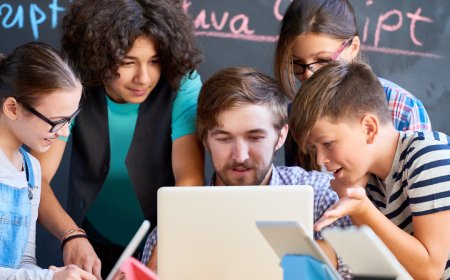
In classrooms around the globe, educators in 2025 are beginning to embrace a subtler form of leadership. We realized that yelling over chaos or demanding attention with stern commands only instills temporary obedience, never respect. Respect, we learned, is earned not by volume but by consistency, predictability, and poise.
Nonverbal communication is the practice of guiding students using gestures, eye contact, proximity, posture, and facial expressions rather than relying on constant verbal instructions. It's not new. Great leaders have always communicated powerfully without words. But in education, where emotional regulation and student engagement are fragile, this approach has gained profound importance.
Teachers found that a simple raised eyebrow could halt side conversations more effectively than repeated reminders. A quiet walk toward a misbehaving student often corrected the behavior faster than a reprimand from across the room. Body language became a language of leadership.
Neurological Harmony of Quiet Guidance
You may already be aware of this, but we have come to understand how the brain reacts differently to non-verbal cues. Words can trigger defensiveness, especially in children who already associate verbal correction with punishment. But non-verbal cues, when consistent and calm, bypass those emotional roadblocks. They activate mirror neurons that encourage empathy and mimicry.
In practicing this, teachers cultivated environments that felt emotionally safe. Students responded better to teachers who didnt just say they cared but showed itthrough smiles, nods, and patient silence. This approach was not just about managing behavior; it was about modeling emotional intelligence.
Cultural Resonance and Universality
Whats remarkable is that nonverbal classroom management transcended cultural barriers. While spoken languages vary, gestures and expressions carry universal weight. A teacher's calm stance, an open palm signaling attention, or a warm glance of approvalall speak fluently in every classroom, from rural Kenya to urban Tokyo.
In multilingual or diverse classrooms, non-verbal strategies proved indispensable. They created common ground where every student, regardless of background, felt understood. This fostered inclusivity without ever needing a translator.
Building Trust Silently
The most effective teachers used silence not as a gap between lessons, but as part of the lesson itself. They knew that every non-verbal interaction taught something: boundaries, empathy, patience, and self-regulation.
Trust grows in the quiet observation of consistent action. When students knew their teachers expectations were consistently communicated through the same signalsperhaps a finger to the lips for silence, a hand on the shoulder for supportthey felt secure. And from security, self-discipline flourished.
Hidden Curriculum
To you, future reader, I wonder how far you've taken this concept. Have you built schools that operate in peaceful symphonies of understanding and mutual respect? Do your classrooms still ring with laughter and energy, but without the tension of combative correction?
We used non-verbal management not just to maintain order, but to teach life skills. Children learned to read emotional cues, to take responsibility for their actions without being scolded, to notice subtle changes in body language, and to respond accordingly. These are the foundations of emotional intelligence and interpersonal skilltraits that, I imagine, are even more essential in your hyper-connected age.
From Control to Empowerment
If were honest, classroom management in earlier times often centered on control. But control is a short-term goal. What we discovered withmanagement was empowerment.
We empowered students to regulate themselves. We gave them ownership of their behavior by modeling self-regulation ourselves. We moved away from correction and closer to connection. And in doing so, we became better not just as teachers, but as humans.
Future We Dreamed Of
You live in a time we could only imagine. Perhaps artificial intelligence co-teaches with you. Perhaps your classrooms exist in virtual spaces, or your students learn alongside sentient machines. Maybe every child wears biometric feedback devices to help monitor engagement and emotional states. Yet I hope, in all your advanced tools, you havent lost the humanity of the classroom.
No machine will ever replace the subtle bond formed when a teacher makes eye contact with a nervous student across the room and offers a reassuring smile. No algorithm will replace the security a child feels when a teacher's quiet proximity says, "I'm here with you," without a word being spoken.
Legacy Beyond Words
So this is the message I leave you: Cherish the silent tools. Teach the next generation that communication is more than words, that leadership does not require noise, and that peace often enters a room quietly.