























Tapioca Starch Manufacturing Plant Project Report – A Complete Guide by Procurement Resource
Procurement Resource, a global leader in procurement intelligence and market research, is pleased to release its latest Tapioca Starch Manufacturing Plant Project Report.
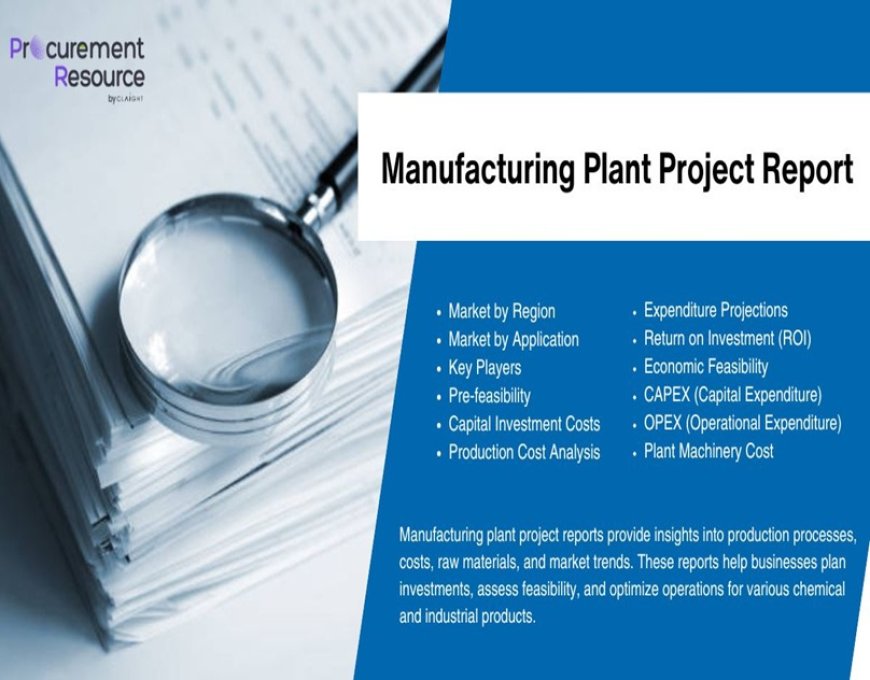
Procurement Resource, a global leader in procurement intelligence and market research, is pleased to release its latest Tapioca Starch Manufacturing Plant Project Report. This expertly curated report provides a strategic roadmap for businesses, investors, and entrepreneurs looking to enter the tapioca starch manufacturing industry. It offers in-depth insights into market trends, production processes, equipment requirements, cost analysis, and long-term investment prospects.
Tapioca Starch: A High-Demand, Multi-Industry Ingredient
Tapioca starch, extracted from the cassava root, is a white, fine-grained, flavorless carbohydrate used in a wide range of industries. Known for its high purity, excellent thickening properties, and gluten-free nature, tapioca starch is a crucial ingredient in:
- Food and beverage products (e.g., puddings, sauces, bakery items)
- Pharmaceutical formulations
- Textile and paper industries
- Adhesives and bioplastics
- Animal feed
With rising demand for plant-based and allergen-free food alternatives, tapioca starch continues to gain traction across both industrial and consumer markets globally.
Comprehensive Project Report for a Profitable Business Launch
The Tapioca Starch Manufacturing Plant Report by Procurement Resource serves as an end-to-end planning and decision-making tool. It highlights all essential technical, economic, and operational factors involved in launching and sustaining a successful tapioca starch production unit.
1. Market Analysis
The report begins with a detailed examination of the global and regional tapioca starch markets:
- Global demand and supply scenario
- Key importing and exporting nations
- Market segmentation by application
- Consumer preferences and growth drivers
- Raw material price trends and volatility
- Regulatory landscape (food safety, sustainability, trade)
Asia-Pacific dominates the market, with countries like Thailand, Indonesia, and India serving as major producers and exporters. Meanwhile, North America and Europe are witnessing a surge in demand driven by gluten-free food trends and industrial applications.
2. Manufacturing Process Overview
The report offers a step-by-step breakdown of the tapioca starch production process, focusing on both small-scale and industrial-scale setups.
Typical Production Process:
- Cassava Root Collection and Cleaning: Fresh roots are collected and washed to remove soil and debris.
- Peeling and Chipping: Mechanical peelers remove the outer skin; roots are chopped into small chips for further processing.
- Grinding and Pulping: Chipped roots are ground into a pulp using hammer mills or disc grinders.
- Starch Extraction: The pulp is mixed with water and passed through sieves or centrifuges to extract starch.
- Sedimentation and Dewatering: The starch slurry is allowed to settle, and excess water is removed using rotary vacuum filters or decanters.
- Drying and Packaging: Wet starch is dried in flash or spray dryers and then packed into moisture-resistant bags.
Alternative Techniques:
- Centrifugal extraction
- Continuous processing for high-capacity plants
3. Machinery and Equipment Requirements
A well-equipped tapioca starch manufacturing plant typically includes:
- Cassava washing machines
- Chippers and peelers
- Pulverizers and pulping machines
- Starch extractors or centrifugal sieves
- Settling tanks or hydrocyclones
- Dewatering units (e.g., vacuum filters)
- Flash dryers or rotary dryers
- Packaging machines
- Quality control labs and storage silos
The report compares manual, semi-automatic, and fully automated machinery setups to help businesses select the right configuration based on production scale, labor availability, and capital investment.
4. Infrastructure and Utility Needs
Setting up a tapioca starch plant requires careful planning of infrastructure and utility provisioning:
- Land requirement: Approx. 5,000 to 20,000 sq. meters based on plant capacity
- Power and fuel: Electricity, diesel/gas for dryers
- Water: Required in large quantities for washing and processing
- Effluent Treatment: Wastewater from the process must be treated to meet environmental norms
- Labor: Skilled and unskilled manpower for operations, quality control, logistics, and maintenance
The report also outlines safety and hygiene protocols necessary for food-grade starch manufacturing plants.
5. Financial and Economic Evaluation
One of the core components of this report is the detailed financial analysis that assesses the economic feasibility of setting up a tapioca starch manufacturing plant.
Capital Investment (CAPEX):
- Land and infrastructure development
- Machinery purchase and installation
- Working capital and pre-operative expenses
Operational Expenses (OPEX):
- Raw material procurement (cassava roots)
- Labor wages and salaries
- Power and water costs
- Packaging and transportation
- Maintenance and repairs
Profitability Metrics:
- Revenue estimates based on current starch pricing
- Gross margin, net margin, and EBITDA
- Return on Investment (ROI)
- Break-even analysis
- Payback period and internal rate of return (IRR)
The report includes various scenarios and sensitivity analyses to assess the impact of raw material price fluctuations and demand shifts.
Sustainability and Industry Outlook
Sustainability is playing a critical role in shaping the future of the starch industry. The rising demand for bio-based and compostable materials has positioned tapioca starch as a key ingredient in bioplastic and eco-friendly packaging applications.
Key emerging trends include:
- Increasing use in gluten-free and vegan food formulations
- R&D into biodegradable films and bio-packaging
- Utilization of cassava starch in textile sizing and adhesive manufacturing
- Use in pharmaceutical and nutraceutical formulations as binders and fillers
With climate change and agricultural sustainability in focus, tapioca cultivation also presents an opportunity for rural employment and agro-industrial integration.
Why Choose Procurement Resource?
Procurement Resource stands apart with its commitment to delivering industry-specific, data-driven intelligence tailored to your business needs. Whether you are entering the market or scaling operations, our expert reports offer:
- Accurate cost modeling and pricing trends
- End-to-end supply chain insights
- Customizable project feasibility studies
- Real-time market tracking and procurement forecasts
Our team of experienced analysts, engineers, and industry experts ensures that every report is backed by reliable data, practical expertise, and global perspective.
Get Your Free Sample Report Today
Thinking about launching a Tapioca Starch Manufacturing Plant?
Request your Free Sample Report to gain actionable insights into the technical, financial, and strategic aspects of this high-potential industry.
Get Your Free Sample Report Today - https://www.procurementresource.com/reports/tapioca-starch-manufacturing-plant-project-report/request-sample
Contact Information
Company Name: Procurement Resource
Contact Person: Ashish Sharma (Sales Representative)
Email: sales@procurementresource.com
Location: 30 North Gould Street, Sheridan, WY 82801, USA
Phone:
UK: +44 7537171117
USA: +1 307 363 1045
Asia-Pacific (APAC): +91 1203185500